Featured

The Story Teller

Some thoughts on the short fiction of Frank O’Connor

How has your quarantine reading been going? Are you tackling those big doorstops that you’ve always meant to get to or is your attention span only focused enough for micro short fiction? Have you preferred to lose yourself in escapist fiction, bend your mind with the experimental stuff or face up to facts with realism? 

 Of course, there are no right answers here, and in my case, I will most likely find myself touching several of those bases. To begin with, I spent the first month of quarantine reading Frank O’Connor’s Collected Stories. As much as I could focus and immerse myself in the world of his short fiction, I immensely enjoyed this experience.   

The Collected Stories opens with arguably his most famous story, “Guests of the Nation.” It’s a stunner. A group of Irish Republican soldiers are guarding a couple of captured British soldiers. The banter between the two groups is easy going. The narrator of the story enjoys the Brits’ easy going humor and their political debates—one of them is a socialist who sees the strife in Ireland through a class conflict lens. It is assumed by all that the soldiers are being held for a prisoner exchange. The story turns when the order comes down to execute the Brits in retaliation for the killing of Irish soldiers.

The narrator and his colleagues are stunned by the order though they reluctantly carry it out. The unfolding horror of the execution is portrayed in an understated, matter of fact manner. It is a masterful story that will remind Isaac Babel readers of his Red Army stories. As it so happens, Babel was a stated influence on O’Connor’s writing. While there are a few other Republican Army stories in this collection, the bulk of them are more domestic tales based in the either in the city of Cork or in the countryside. Among my favorites are the ones based on his childhood. The most famous of these is “My Oedipus Complex,” a wry tale of the battles that a mother-attached boy wages with his just returned from the war father. A twist at the end of the story makes for high ironic comedy.

 O’Connor is especially strong at capturing the viewpoints of children—their selfishness and anxieties. The boys are often closer to the mothers though yearning for attention from their often alcoholic fathers (a persistent theme in O’Connor’s fiction). His depiction of girls and women in general is quite fascinating. On one level they appear to be mean, bitchy, and closed off, intimidating, if not terrifying the boys and men who encounter them. The usually male narrators frequently make wry comments about the difficulty of women’s attitudes and behavior, which certainly should be interpreted as misogynistic, but not necessarily reflective of the author’s beliefs. 

 In fact, a sustained reading of O’Connor’s work has led me to believe that his female characters are presented with deep sensitivity, and that the sometimes boorish attitudes of his narrators are meant to be taken with a good dose of irony.  

The position of women in O’Connor’s stories is difficult. They are constrained by the church and its draconian attitudes, as well as often self-absorbed, bitter, unreliable, and the aforementioned frequently alcoholic men. In various instances they use their intelligence or patience or faith to endure their difficult circumstances. In the course of these stories, which are arranged chronologically in order of publication, O’Connor’s skill in portraying women deepens in subtlety and psychological richness grows—so it seems to me anyway.

One of the most fascinating of his “relationship” stories is “There Is a Lone House,” in which an unnamed woman with a family secret who lives alone takes in an unnamed younger man who is a wandering laborer. The man does work for the woman in exchange for shelter. In time they become lovers. Eventually the man grows restless, but he eventually returns. Their relationship is passionate and contentious. It changes both of them but it’s complicated, as defined in this passage.

“It seemed a physical rather than a spiritual change. Line by line her features divested themselves of strain, and her body seemed to fall into easier, more graceful curves. It would not be untrue to say she scarcely thought of the man, unless it was with some slight relief to find herself alone again. Her thoughts were all contracted within herself.”

 On one level, this is the woman’s sexual reawakening, triggered perhaps by her unnamed lover’s virility, but it is sustained and deepened by her own reserves and emotional intelligence, as the man discovers time and again: “He had felt in him this new, lusty manhood, and returned with the intention of dominating her, only to find she too had grown, and still outstripped him.” The pair’s path to mutual respect and accommodation is hard won and solid in spite of the revelation of the woman’s secret (I won’t give it away). Dignity, self and mutual respect, are achieved in this impressive story of the growth of a mature relationship.

O’Connor’s later stories (this collection presents them in chronological order of publication) are largely focused on death. My favorite of these tales is “The Story Teller,” in which a young girl’s beloved, tale spinning, seemingly pagan grandfather is dying. He has scandalized his more religious children with his scorning of the church and his embrace of Irish folklore and stories. Afric, the little girl, fully expects her grandfather to be borne away from life by the mysterious figures in the tales that he has enchanted her with. She ignores the judgmental comments of her family members as they speak of their patriarch’s lifelong blasphemy as she keeps the faith in her grandfather’s stories. However, no magical moments happen as her grandfather quietly slips away.

“There was no farewell, no clatter of silver oars or rowlocks as magic took her childhood away. Nothing, nothing at all. With a strange choking in her throat she went slowly back to the house. She thought that maybe she knew now why her grandfather had been so sad.”

It is a bittersweet, if not crushing moment in a little girl’s life, but perhaps also a statement of purpose of the writer’s life: forging ahead with the work of storytelling in the face of inevitable disappointment and decline. Good practices to consider in the midst of a grim pandemic. And what a pleasure and comfort to muse on these notions while reading these wonderful stories. 

Featured

Forward and Forewords

I just finished Zora Neale Hurston’s recently published collection of stories,Hitting a Straight Lick with a Crooked Stickwith an introduction by Hurston scholar, Genevieve West. As is my habit, I read the stories first and then the introduction after (more on that practice later).

A number of the stories in this collection were recently rediscovered in small publications from seven or eight decades ago. Most of Hurston’s well-known fiction is set in her hometown of Eatonville, Florida, a patch of earth that she makes her own as much as Faulkner makes Yoknapatawpha County the center of his fiction, as Tayari Jones observes in the book’s foreword (yes, there’s a foreword too). 

Besides presenting a number of Hurston’s stories that have remained in obscurity for years, this collection also reveals an aspect of her work that is not generally known. A number of the stories are set in Harlem (for example, her two mock biblical stories, both titled “The Book of Harlem”) among the community of African Americans that made the Great Migration northward from southern places such as Eatonville. These rural southern greenhorns are vulnerable to smooth talking city slickers and seducers, though sometimes they come out on top. These stories have the same flavor of folklore and community triumph, tragedy, and humor as her more well known works in rural settings. And when I say humor, I mean it, there are many laugh out loud moments in these stories. 

These stories were published over a decade plus in various periodicals (or not at all in her lifetime), and demonstrate her growth as a fiction writer, not least among them the evolution of her depiction of African American dialect on the page. Her flair for dialogue is always vivid, and as I said above, frequently hilarious when that was her intention, as in this line from the story, “Sweat”: “She don’t look lak a thing but a hunk uh liver wid hair on it.” Pretty difficult to get that image out of one’s mind. Yet this funny line is in the middle of a story about a man who beats his wife horribly and cheats on her. Spoiler alert: she gets her revenge in a very brutal way. It’s an extraordinary story. 

I am merely scratching the surface here. Although not all of these stories are stone classics, they are all worth reading for their wit, feeling, atmosphere, characters, and ideas. Zora Neale Hurston’s work is squarely rooted in African American life whether in the rural south or in Harlem. She had the extraordinary ability to set a scene in just a few words, to dramatize conflict between characters using subtle shifts in tone, and of course there is always the great humor. And of course she was a great feminist icon by just practicing her art with courage, heart, and confidence in a so-called “man’s world.” I plan on reading a lot more of her work going forward. 

And speaking of forward and forewords, I very much enjoyed Genevieve West’s informative introduction. Perhaps I would have gained more from these stories had I read it first, as was intended, but that wasn’t how I did it. 

When I enter a novel or story for a first reading, I am as tentative as I am entering a party, trying to figure out who is who and getting into the rhythm of the gathering. Maybe not the best analogy since I am a shy person who feels anxious in crowds, but I also feel a certain degree of anxiety when reading a piece of fiction for the first time. Am I following the thread of the plot? Who is this or that character?  Am I picking up on the themes/metaphors/symbols of the story? Am I doing right by this author?

Continuing with this shy person at a party analogy we might observe that it is nice to have a friendly face to introduce us around to the various strange faces or at least give us a road map to the social situation. Therefore, I submit that a well written and thoughtful introduction to a book can be, well, a nice introduction to the characters, plot, themes, author’s intentions, etc. It can help us cut through the confusion, to reduce the anxiety of where am I, who is this, what’s going on? 

Here is where matters become complicated: despite my “anxiety” and confusion when getting into an unfamiliar work of fiction, I am more brave venturing into that alien territory than I am in a social gathering. I flatter myself that I have enough intelligence, sensitivity, reading experience, and scholarly training to get my bearings when I am reading a work that is new to me. 

As I said above, there is a lot of value in a well written and informed introduction. It can open up a text in a meaningful way. It’s a good way to enter the party, as it were, but in books as in life, I usually loosen up in the course of reading the book and go back to the introduction at the end, which is what I did with Hitting a Straight Lick with a Crooked Stick

Forward and foreword!

Featured

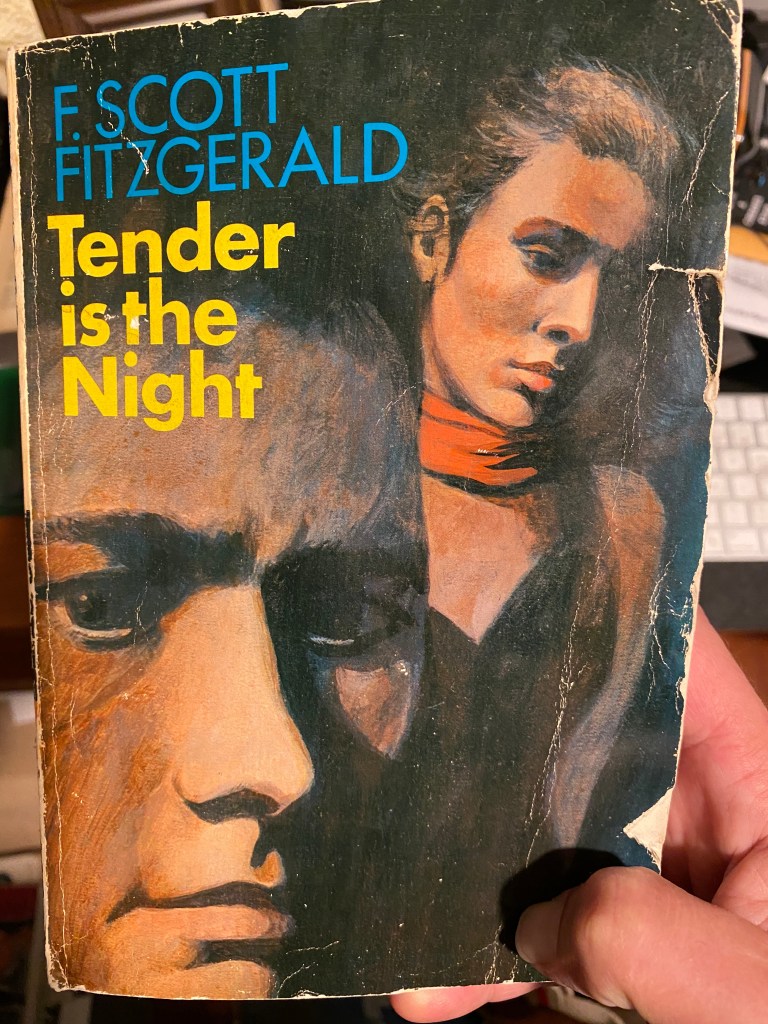
A Few Thoughts on Tender Is the Night

I recently read F. Scott Fitzgerald’s Tender Is the Night. I was eager to get to it after having such an outstanding experience reading his collected stories. Many of the stories that I most enjoyed were composed during the years that Fitzgerald was struggling with that novel, not to mention with his alcoholism, his wife Zelda’s mental illness, and a constant need of funds. 

It is difficult to ignore the details of Fitzgerald’s life when dipping or diving into his work, or at least it is for me. It is doubly difficult to separate the facts of his life from his fiction when the material at hand is so heavily autobiographical. When we watch the main protagonist of the novel, Dick Diver, go to pieces due to excessive drinking, involvement in his wife’s therapy (he’s not only her husband, he’s in charge of her treatment!), love affairs, and self-absorption, we can’t help but think of the soap opera that was F. Scott Fitzgerald’s life.

Dick Diver was based on Lost Generation painter, aesthete, and man on the scene, Gerald Murphy, but mainly Fitzgerald himself. Perhaps the initial impression we are given of Dick, as seen through the eyes of his eventual paramour, Rosemary, is the Murphy influence, “He seemed kind and charming—his voice promised that he would take care of her, and that a little later he would open up whole new worlds for her, unroll an endless succession of magnificent possibilities”

Gerald and Sara Murphy

By novel’s end, Dick is a beaten man, exhausted by alcoholism, his romantic affairs, and his relationship with his mentally ill wife, Nicole. The man who strode about so confidently on a French Riviera beach when Rosemary first met him, is five years later on that same beach, a broken man who is too weak and exhausted to perform a physical stunt that he had once performed with ease. That this humiliating episode happens in front of the now recovered Nicole, who is engaging in a hot affair with another man, as well as an older and less starry-eyed Rosemary. The existential and sexual impotence of Dick Diver (pun intended?) is complete. If the glamourous Dick of the beginning of the novel is based on Murphy, the Diver of the end of the novel is the battered Fitzgerald.

I must admit that I struggled to get through Tender is the Night. It is frequently brilliant and very moving at its conclusion—its autobiographical details make it doubly so for me—but I had to drag myself through certain sections. I think this mainly due to a sort of Fitzgerald overdose that I experienced after eight hundred fifty pages of his short stories. Sometimes you have to put that box of candies down after you’ve gorged yourself, however I didn’t in this case and as a result I didn’t give Tender Is the Night the attention it deserved.

I plan on reading more Fitzgerald shortly, but I will give Scott a short break before I dive into Gatsby and maybe the first two novels. And of course, there are the short stories that weren’t included in the gigantic collection…

Featured

Puttin’ on the Fitz

“You’ve been through all of F. Scott Fitzgerald’s books/You’re very well-read, it’s well-known”Bob Dylan, “Ballad of a Thin Man”

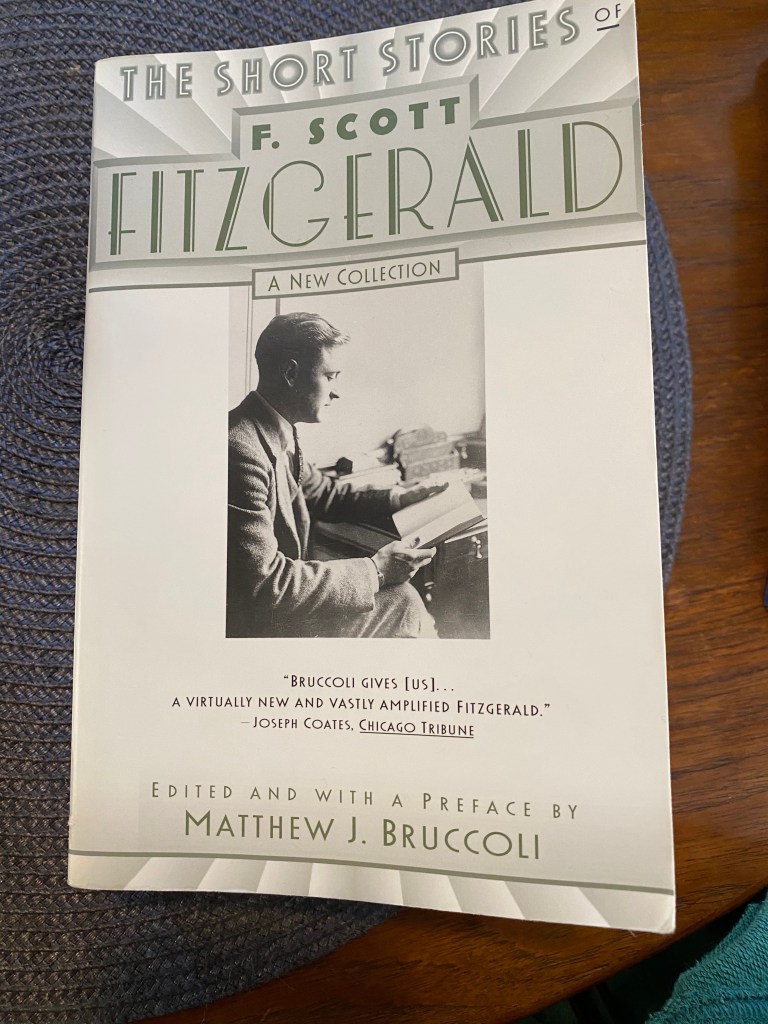
I am currently reading The Short Stories of F. Scott Fitzgerald, a gigantic compilation edited by the noted Fitzgerald scholar and biographer, Matthew Bruccoli. It is not a complete collection of Fitzgerald’s sizable amount of short fiction, but at nearly eight hundred pages and a pound and a half in weight (in the paperback edition), it is a pretty thorough immersion in this form. I am loving it a great deal.

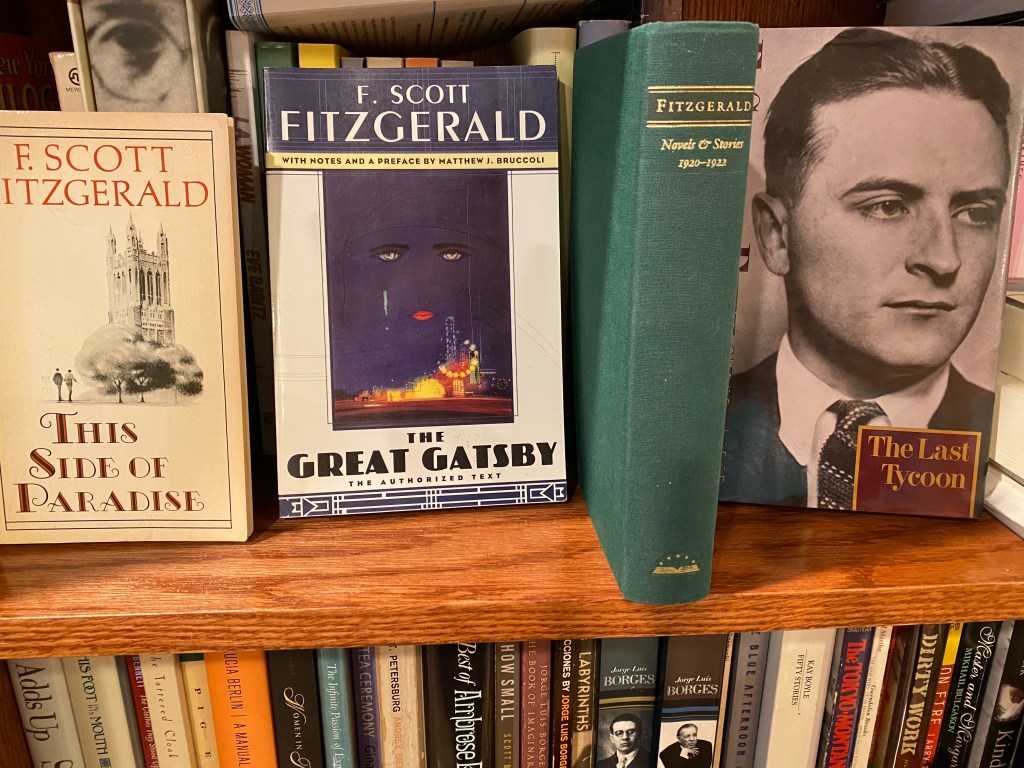
Over the years, I have read a good amount of Fitzgerald’s work. I have read The Great Gatsby a number of times, as well as Tender Is the Night, some short stories, and a few of his essays, including his famous one, “The Crack-Up.” I’ve also read Tom Dardis’s  Some Time in the Sun, an excellent book about writers such as Fitzgerald, William Faulkner, Nathaniel West, and James Agee and their (mis)adventures in Hollywood trying to write screenplays. Fitzgerald’s time there was kind of a tragicomedy. He really couldn’t figure out the form of screenwriting, he had a hard time staying sober, and the pay barely kept him above water. On the other hand, his often miserable experience in California provided good material for his fiction.

What is it about Fitzgerald that I like so much? He is a beautiful and witty writer, to begin with. Even in his most throwaway stories (and a good chunk of them were written for the bucks) usually have a sparkling line, a sharp observation. While I know that rich people are not like you and me, and I am not particularly interested in them, I am fascinated by Fitzgerald’s admiration and ambivalence about the wealthy. Fitzgerald’s fiction also wove in autobiographical elements from his life, most notably his marriage to the beautiful, brilliant, and mentally ill, Zelda Sayre. Their relationship was of course an amour fou for the ages. Scott and Zelda come as a package deal in any serious study of the author’s work and life. 

But you know all of that of course. What’s interesting in this collection of stories are the repeating themes of Fitzgerald’s work, his muses, if you will: the unattainable (even when she is “attained”) woman, money, and American fame. These themes are dramatized most brilliantly in The Great Gatsby, but it’s the well Fitzgerald returned to again and again. While it does get a bit monotonous to see variations on Fitzgerald’s obsessions repeated throughout these three dozen stories (and keep in mind these are Bruccoli’s selections), even the most tedious tale contains one bit of sparkling wit, a startling descriptive phrase, or a melancholy evocation of loss. 

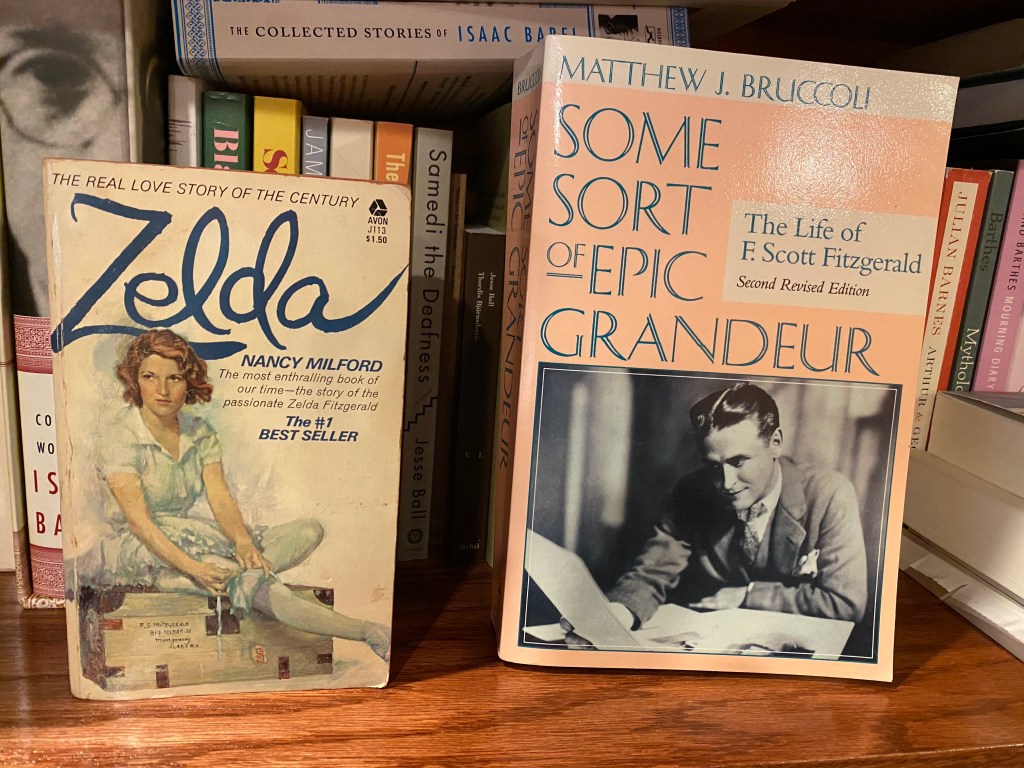
Even after I finish this deep immersion in Fitzgerald’s short fiction, I plan to keep on going through his novels, Zelda’s lone novel, Save Me the Waltz, and possibly Bruccoli’s biography of Fitz and Nancy Milford’s biography of Zelda. It’s pretty difficult to read a lot of the work of an iconic writer like Fitzgerald and avoid studying his life. It is for me, anyway. 

Not pictured: Tender Is the Night

I usually do this sort of thing once a year where I go deeply into an author’s work. It’s the only way to truly feel acquainted with their art. It’s generally quite a rewarding experience, though it runs the risk of turning me off them forever (see: Philip Roth). I’ll take that risk though. Who knows where it might spin off? Maybe I’ll read more “Lost Generation” writers. Maybe I’ll veer over to the Harlem Renaissance writers. Maybe I’ll grow so sick of early twentieth century modern American fiction that I’ll spend a few months reading English novels from the nineteenth (I do have a stack of them!). But for now, it’s more F. Scott for me.

And what about these?
And these!

Some Thoughts About From Here to Eternity

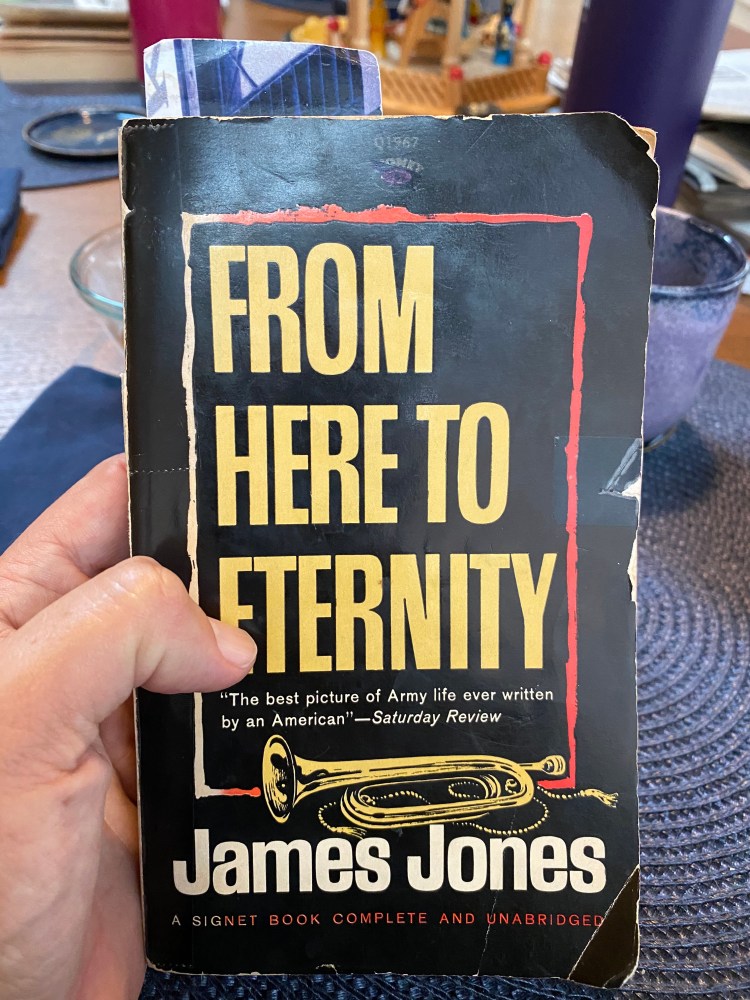
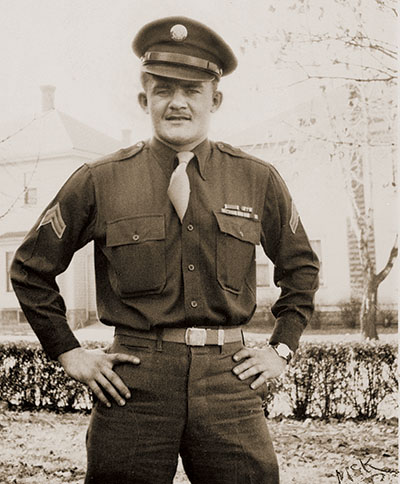
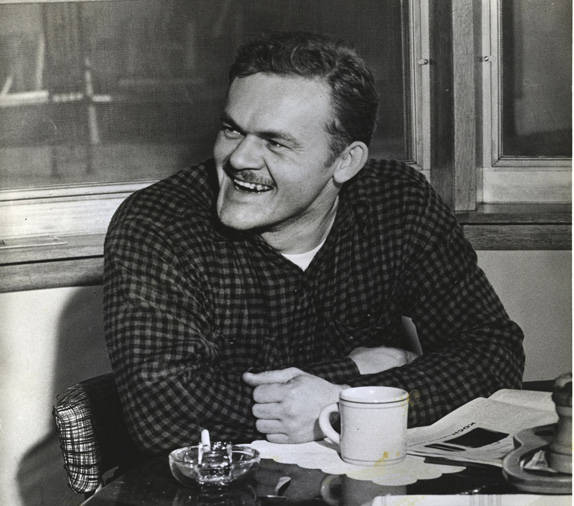
From Here to Eternity by James Jones is my first completed book of 2020. Truth be told, I began it near the end of December, but I’ll put it in this year’s column. I was inspired to read it a few months ago after I re-read Joan Didion’s essay, “In the Islands.” Near the end of this piece, Didion recounts a couple of visits to the Honolulu settings of the novel including the Schofield Barracks where Jones based the G Company of his protagonists and where he actually served and witnessed the attack on Pearl Harbor before he was shipped off to Guadalcanal (the setting of his novel, The Thin Red Line).

There is a comical and slightly tragic moment in this essay when Didion goes into a Honolulu bookstore in the days following Jones’s death. She asks a clerk if they have a copy of From Here to Eternity and is asked if it’s a bestseller, while in another she is advised by “the golden child in charge” to check the “psychic-science shelf.”

Didion’s despairing rumination over these incidents made me want to read Jones’s novel: “In that instant I thought I grieved for James Jones, a man I never met, but I think I grieved for all of us: for Jones, for myself, for the sufferers of mean guilts and for their exorcists, for Robert E. Lee Prewitt, for the Royal Hawaiian Hotel and for this golden nitwit who believed eternity to be a psychic science.”

It seems to me that after spending three and a half weeks immersed in From Here to Eternity, all eight hundred twenty pages of it, that it must be a novel that gets under the skin of its most passionate readers. But at this current moment who are these passionate fans of the novel besides Joan Didion and me?

How can I sell this novel to the socially and artistically aware reader of January, 2020? Its faults are several. It is probably at least a hundred pages too long. Its depictions of women,and especially many of its male characters’ attitudes towards women, are misogynistic; its depictions of its Chinese characters, brief though they are, are cringeworthy; it is awkwardly written in patches—man, did Jones love adverbs, including some strange, invented ones (“sillily”; “whiskily”). What’s more, it’s not a war novel featuring clear heroes and villians. Most likely, today’s reader is more likely acquainted with the 1953 film and that indelible image of Burt Lancaster and Deborah Kerr rolling around in the surf.

''From Here To Eternity'' ; Burt Lancaster, Deborah Kerr

Adding all those things up, it’s challenging to see what value this novel might hold for the contemporary reader, and yet, at its best it captures the struggles of men and women to claim their individual humanity in a restrictive, hypocritically moralistic society on the verge of a devastating war.

When the Thomas Wolfe-worshipping Jones brought his first manuscript to famous editor (of Wolfe, Ernest Hemingway, F. Scott Fitzgerald, and many others) Max Perkins, the autobiographical novel was set aside in favor of a conversation about Jones’s life in the Army and his earlier experiences on the bum during the Depression years. “That’s the book I would like to read,” Perkins essentially told Jones, and that began its long path to publication. Perkins wouldn’t live to see that day.

What is that I found so compelling about this book? It is the men of G Company, the nitty gritty of their daily life in the Army, the contrasting and clashing personalities of enlisted men from different backgrounds as they go about their duties, clash with the brutality of their superiors, struggle to survive on meagre pay, live for the times when they can head into the bars or brothels of Honolulu to blow off steam. Hovering over all this is the war that they know is coming–they just don’t know how directly they will be hit. But most compelling to me, is the inherent rebellion at the core of this novel. In its own way, despite the oppressive structures of the military, Hawaii is a fluid setting for these characters to break out of the strictures of traditional American moralistic strictures of gender roles, sexuality, and race. I will perhaps expand on these thoughts in the future.

Some impressions of the novel: The rebelliousness and restlessness of From Here to Eternity’s main protagonist, Robert E. Lee Prewitt and some of the rebels he encounters along the way—the crazy New York street kid, Angelo Maggio and the former Wobbly and bohemian philosopher Jack Malloy, for example— put me in mind of Jack Kerouac’s beat heroes (Jones, virtually the same age as Kerouac, did not think much of the “King of the Beats”). Jones’s matter-of-fact portrayal of homosexual relationships between some of the soldiers and gay men in Honolulu (a 2013 edition of the novel edited by Jones’s daughter, Kaylie, restored more explicit scenes of gay sex and relationships that had been removed from the original manuscript by its original publisher, Scribners) is a topic worthy of more, detailed scholarly study. In addition, despite the misogynistic attitudes of many of this novel’s male characters (and perhaps its author?), it is the two main women characters in the book, Karen Holmes, an officer’s wife who looks for love and sex outside of her cold marriage, and Alma, a young woman who uses sex work in the anonymity of Hawaii to return to the mainland with money and a new identity, who manage to achieve new social power. As Karen reflects to herself when she is leaving her husband near the end of the book, “Men were so much softer than women were.”

Above all of course From Here to Eternity is a war novel, and Jones’s most focused and vivid writing occurs when he is describing scenes of brutal violence—the hell of the stockade; a fatal knife fight; and most memorably, the Japanese aerial assault on G Company that is part of the Pearl Harbor attack. We see who the real soldiers are when the Japanese planes are strafing the compound. Milt Warden, the non-commisioned First Sergeant, who has been an efficient administrator and served as a buffer between the commissioned officers and the enlisted men, all the while conducting a hot affair with Karen Holmes, is literally cool under fire as the planes attack. He orders his men out of harm’s way while pushing aside a superior officer to get at the ammo supply to fire back at the planes. Warden’s joyous cry as he keeps his men together sums up his proficiency for battle and fitness as an officer, “All right, all right, you men. Quiet down Quiet down. It’s only a war. Ain’t you ever been in a war before?” The action, the drama, and sharpness of the details of the fire fight are exhilarating to read. 

I have many more thoughts about this book that I would like to develop, but it will take another reading and more reflection, so I will save all that for another day. Highly recommended. 

What Am I Going to Read Next?

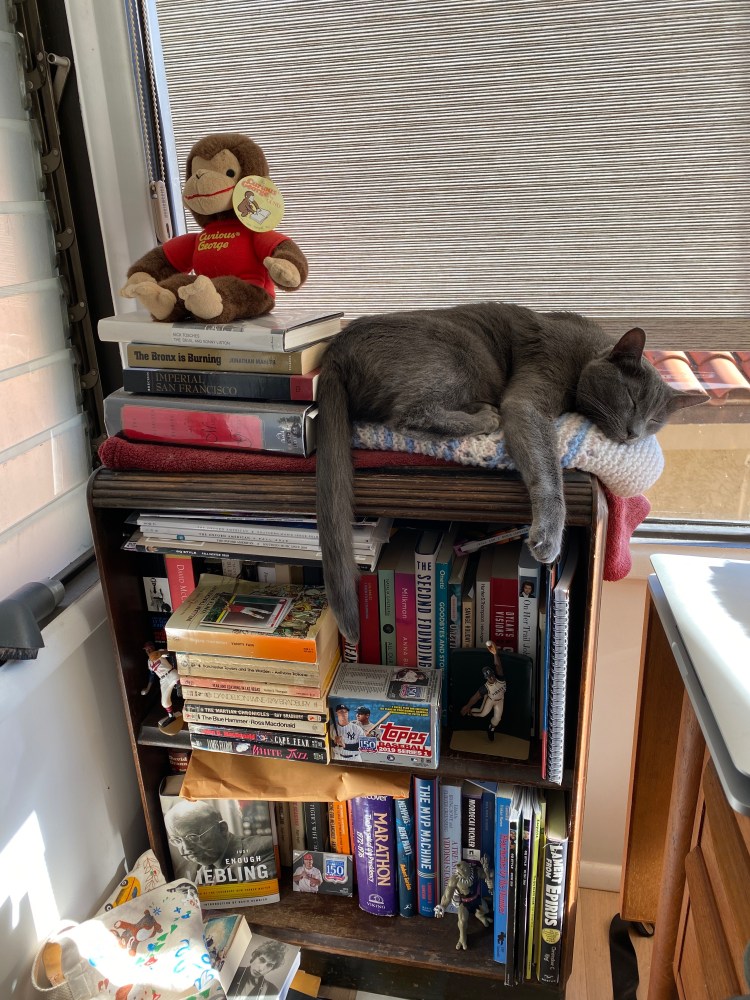
As I write these words I am sitting next to a bookcase crammed full of volumes.

Cat not included.

I think of this as my “possibility bookcase,” as in, I might possibly soon read the books that I have filed and stacked on its shelves. These are books that I have moved up from the larger library that my wife Erin and I have accumulated from lifetimes of reading, book collecting, and working in bookstores. My “theory” is that if I keep them next to me while I am sitting at my desk, I will feel either inspired or made guilty by their unread presence, and get to them sooner or later.

This is only some of it…

“So what are you going to read next?” Erin and I ask one another when we observe that the other is coming to the end of a book. We grimace and say, “Well, I’ve got a couple of titles in mind,” and then reel off five or six titles as beads of sweat form on our foreheads. That is only a slight exaggeration.

Option paralysis is truly a First World Problem, but it’s nevertheless a problem. So here’s a bunch of questions to paralyze you: How do you follow the mystical thread from one book to the next? Do you read another book by the same author, if you’re digging them? Or do you completely change gears and opt for another voice? Are you following thematic or subject threads? Do you rely on recommendations from other readers? Are you a spontaneous reader who just grabs whatever appeals to you at the moment?

Like many of you out there, I would answer “yes” to all of the above questions, though I might be less inclined to answer in the affirmative to the last question. I am not a very spontaneous person, and that goes double for my reading. I like to plan out what I am going to read next, I like to weigh the options until I hit the just right book on the mystical reading thread. Or at least that’s my hope.

An example of how I go about this process is where I’m at right now. I am currently reading James Jones’s From Here to Eternity (much more about this in a future post) and am just about finished with that doorstop. I’ll probably finish it tonight. It’s taken me about three and a half weeks to read (it’s eight hundred twenty pages long) and in that time I’ve been riveted by it despite its many flaws. I’m fully invested in the characters and their fates, I am immersed in the sultry Hawaiian weather of its setting, and I am feeling a deepening dread as I know that the attack on Pearl Harbor is coming (spoiler alert: it happens, and it’s the best writing in the book). Anyway, I really love this book, even if it is not exactly a great novel. I will miss From Here to Eternity, we’ve been living with each other for quite a while now.

So where do I go next? One part of me wants to read more World War II novels, such as Norman Mailer’s Naked and the Dead (that would be a re-read), or maybe I’ll finally get all the way through Joseph Heller’s Catch-22 this time, or maybe I should go on a James Jones kick and read his combat novel of the Guadalcanal campaign, The Thin Red Line (it’s on the shelves downstairs). Maybe I’ll read them all, or none of them. And even if I do, it will probably be a better idea to read a different author next, with a different voice and different subject, as a sort of literary palate cleanser. Well, hopefully it will be more than that. And then of course, I could also read a biography or something else non-fiction as I mourn the absence of the From Here to Eternity Characters from my life…or maybe…or maybe…or maybe…

To Be Continued…