“You’ve been through all of F. Scott Fitzgerald’s books/You’re very well-read, it’s well-known”Bob Dylan, “Ballad of a Thin Man”
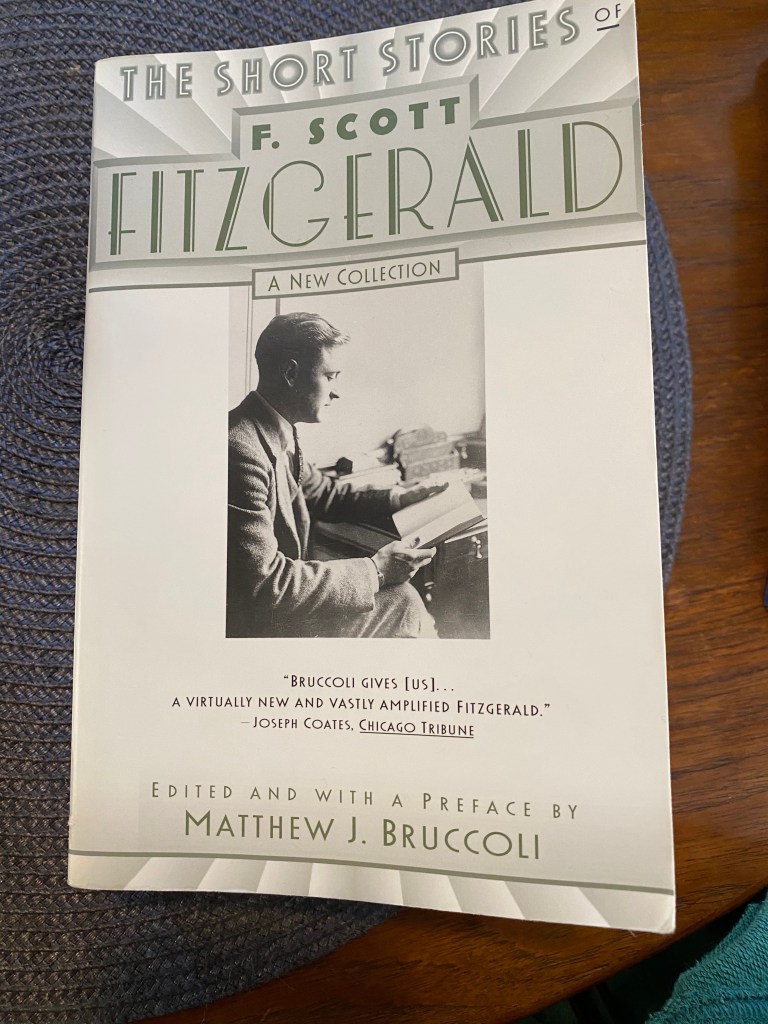
I am currently reading The Short Stories of F. Scott Fitzgerald, a gigantic compilation edited by the noted Fitzgerald scholar and biographer, Matthew Bruccoli. It is not a complete collection of Fitzgerald’s sizable amount of short fiction, but at nearly eight hundred pages and a pound and a half in weight (in the paperback edition), it is a pretty thorough immersion in this form. I am loving it a great deal.
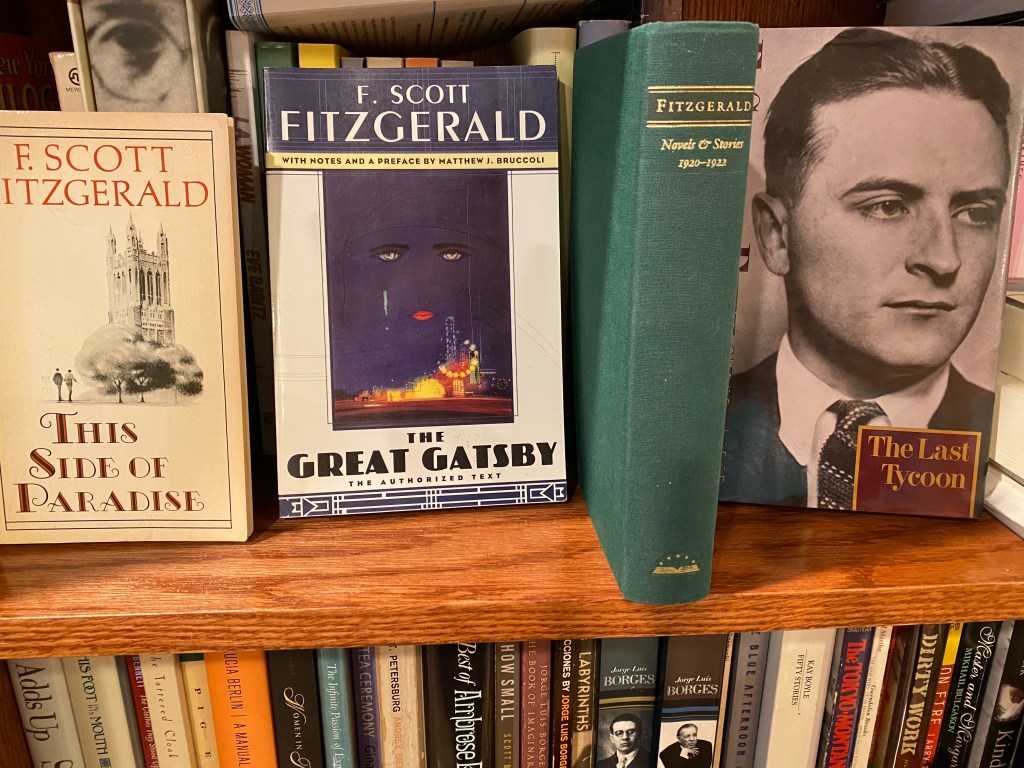
Over the years, I have read a good amount of Fitzgerald’s work. I have read The Great Gatsby a number of times, as well as Tender Is the Night, some short stories, and a few of his essays, including his famous one, “The Crack-Up.” I’ve also read Tom Dardis’s Some Time in the Sun, an excellent book about writers such as Fitzgerald, William Faulkner, Nathaniel West, and James Agee and their (mis)adventures in Hollywood trying to write screenplays. Fitzgerald’s time there was kind of a tragicomedy. He really couldn’t figure out the form of screenwriting, he had a hard time staying sober, and the pay barely kept him above water. On the other hand, his often miserable experience in California provided good material for his fiction.
What is it about Fitzgerald that I like so much? He is a beautiful and witty writer, to begin with. Even in his most throwaway stories (and a good chunk of them were written for the bucks) usually have a sparkling line, a sharp observation. While I know that rich people are not like you and me, and I am not particularly interested in them, I am fascinated by Fitzgerald’s admiration and ambivalence about the wealthy. Fitzgerald’s fiction also wove in autobiographical elements from his life, most notably his marriage to the beautiful, brilliant, and mentally ill, Zelda Sayre. Their relationship was of course an amour fou for the ages. Scott and Zelda come as a package deal in any serious study of the author’s work and life.
But you know all of that of course. What’s interesting in this collection of stories are the repeating themes of Fitzgerald’s work, his muses, if you will: the unattainable (even when she is “attained”) woman, money, and American fame. These themes are dramatized most brilliantly in The Great Gatsby, but it’s the well Fitzgerald returned to again and again. While it does get a bit monotonous to see variations on Fitzgerald’s obsessions repeated throughout these three dozen stories (and keep in mind these are Bruccoli’s selections), even the most tedious tale contains one bit of sparkling wit, a startling descriptive phrase, or a melancholy evocation of loss.
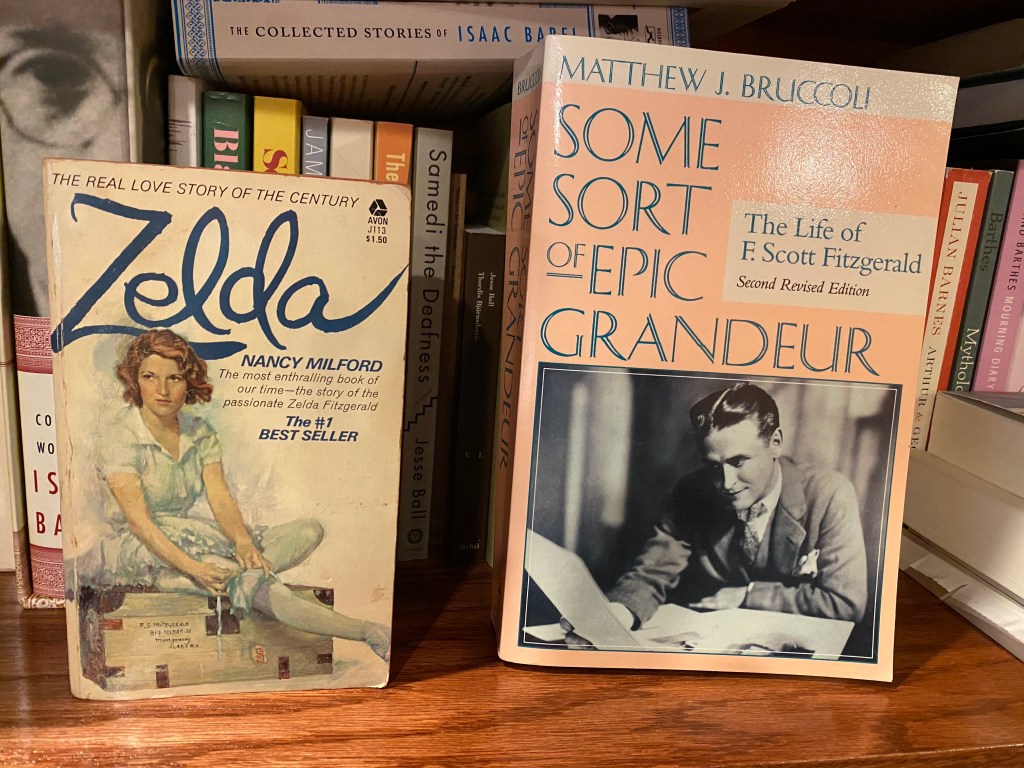
Even after I finish this deep immersion in Fitzgerald’s short fiction, I plan to keep on going through his novels, Zelda’s lone novel, Save Me the Waltz, and possibly Bruccoli’s biography of Fitz and Nancy Milford’s biography of Zelda. It’s pretty difficult to read a lot of the work of an iconic writer like Fitzgerald and avoid studying his life. It is for me, anyway.
I usually do this sort of thing once a year where I go deeply into an author’s work. It’s the only way to truly feel acquainted with their art. It’s generally quite a rewarding experience, though it runs the risk of turning me off them forever (see: Philip Roth). I’ll take that risk though. Who knows where it might spin off? Maybe I’ll read more “Lost Generation” writers. Maybe I’ll veer over to the Harlem Renaissance writers. Maybe I’ll grow so sick of early twentieth century modern American fiction that I’ll spend a few months reading English novels from the nineteenth (I do have a stack of them!). But for now, it’s more F. Scott for me.


 What Ken Is Reading